
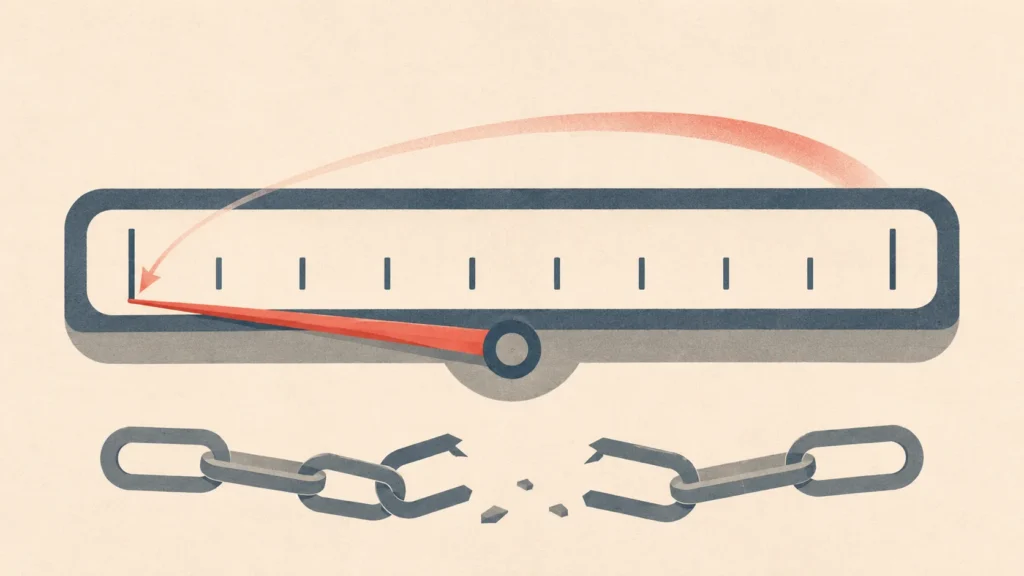
On December 1, 2026, Ahrefs replaces its Domain Rating with DR4, and most small sites see their score fall. The drop is not a penalty and says nothing about your content. It means many of your links come from sites with little or no search traffic, which DR4 now counts for much less.
We measured the change on 107 working websites and on 501 expired domains before the switch. This article turns that data into a way to read your own drop: what changed, which profiles lose, and how to check which of your links stopped counting.
What changed in the score
Domain Rating is still calculated from links, and it is still a 0 to 100 score relative to every other site Ahrefs rates. Three things changed in how those links are counted.
- Traffic now matters. Links from sites that Ahrefs estimates receive organic search traffic carry more weight. A link from a site nobody finds through Google counts for much less than it did.
- Spam is cut harder. Ahrefs moved to a machine learning model to label spam domains in January 2026. Under DR4, spam-labeled domains lose the most, and those rated DR 30 to 70 fell by a median of around 15 to 20 points in Ahrefs’ own testing.
- Subdomains stand alone. A subdomain no longer inherits its root domain’s rating. It gets its own score from the links pointing to it.
The pool of rated sites shrank as a result: about half as many sites have a DR4 score as had a DR3 score. When fewer sites can pass rating, every link from outside that pool stops contributing.
Who drops, according to our data
Ahrefs’ own figures look at the 1,000 biggest sites on the web, where 64.3 percent gained rating. Smaller sites tell a different story. In our study of 107 small and mid-size websites, combined rating fell 35 percent and the median site went from DR 22 to DR 6. In our study of 501 expired domains, combined rating fell 49 percent and 132 domains went to exactly zero.
Two patterns from those samples are worth knowing before you look at your own number.
- A high DR3 was no protection. Of the 11 working sites rated DR 40 or higher, five fell below DR 1. Among the expired domains, ten went from DR 50 to zero.
- Moderate, earned ratings held up best. Sites that started between DR 20 and 29 were the most stable band: only two of 30 fell below 1, and twelve gained.
What separates a drop from a gain
Aggregates hide the cause, so we opened up six expired domains: three that fell from DR 50 to zero and three that gained between 34 and 39 points. Both groups had similar numbers of referring domains. The difference was entirely in who was linking.
The three that collapsed had their strongest links from link shops and rank checker pages, rated DR 50 to 76, with no estimated organic traffic at all. Most of those links were first seen between April and September 2026. The three that rose had fewer links, two of them mostly nofollow, but those links came from sites people actually visit: design marketplaces and tutorial sites, a large website builder, national business listings and job portals.
That is the whole story in one line: under DR3 a link was worth the rating of the site it came from, and under DR4 it is worth something only if that site has an audience. If your drop is large, the most likely reason is that a large share of your rating sat on links from sites without one.
How to diagnose your own drop
You can check all of this with a standard Ahrefs account and the free Domain Rating endpoint. Work through the steps in order; most drops are explained by the second one.
1. Record both numbers while you still can
Ahrefs’ free Domain Rating endpoint returns DR4 when you add version=dr4 to the request, and the old score without it. Ahrefs says DR3 stays available through the API only for a short period after December 1, with no end date given. Save both figures for your site and your main competitors now, so you have a baseline to explain the change against.
2. Sort your referring domains by traffic
Open your referring domains report and sort it by the linking site’s estimated organic traffic instead of its DR. Count how many of your top 50 linking domains by DR have no traffic at all. If most of them sit at zero, you have found the cause. Those links still exist, but DR4 no longer passes much rating through them.
3. Look for spam-labeled domains
Ahrefs flags domains its model labels as spam, and you can filter for them in the backlink reports. A profile with many spam-labeled linking domains will fall further than one with a few, because those domains lost the most rating of all under DR4.
4. Check when your strongest links appeared
Sort the same report by first seen date. In our sample, the domains that collapsed had almost all of their strong links appear within a few months of 2026. A burst of high-rated links in a short window, from sites with no visitors, is the profile DR4 discounts hardest, whether you built those links or inherited them with a domain.
5. Check for subdomain effects
If your site lives on a subdomain, or many of your links come from subdomains of large platforms, part of your drop is structural. Those subdomains no longer borrow the platform’s rating. In Ahrefs’ own example, github.io fell 32 points.
6. Compare against your competitors
Ahrefs itself suggests checking your closest competitors, since they may see similar changes. If everyone in your niche fell by a similar amount, your relative position has not changed, and relative position is the only thing a relative score measures.
What a lower DR means for rankings
Nothing directly. Domain Rating is an Ahrefs metric and Google does not use it, as we explain in our guide to what backlinks actually do. Your rankings did not move on December 1 because Ahrefs changed a formula. What changed is the number that agencies, link sellers and domain buyers use to price your site and its links.
There is a more useful reading, though. DR4 now resembles one plausible way a search engine might weigh links: by whether real people are on the other end. If your rating collapsed under that test, the links behind it were probably never doing much for your rankings either. The drop is a cheap audit of your link profile, done for you.
How to rebuild the number
Buying more links from rated sites will not bring it back, because those are exactly the links DR4 stopped counting. What moves DR4 is links from sites with readers in your field. The plays that produce those links are the slow, editorial ones: publishing original data that others cite, answering journalist requests, and digital PR built on your own numbers. Our overview of link building strategies rates each of them on the evidence.
If you report DR to clients or a manager, send both numbers side by side before the first December report, with a sentence on why they differ. Explaining a drop in advance is much easier than explaining it afterwards.
Figures in this article reflect the data available when it was last updated.
Frequently asked questions
Is a DR drop under DR4 a penalty? No. Ahrefs says a lower score is not a judgment on your content. It reflects only which of your links its new model still counts, and Google does not use Domain Rating at all.
Why did my DR go up? Usually because your links come from sites with real search traffic, which DR4 weighs more heavily, while sites around you lost rating built on links without it. Most of the largest sites on the web gained in Ahrefs’ testing.
Can I still see my old DR after December 1? For a short time, through Ahrefs’ API. Ahrefs has not said for how long, so record both scores now if you need them for comparisons or reports.
My DR is now zero. Is the domain worthless? Not necessarily. A zero means none of your linking sites pass rating under the new model. If the site has its own readers and rankings, the score matters little. If you bought the domain for its links, it is a strong sign those links were never worth much.
